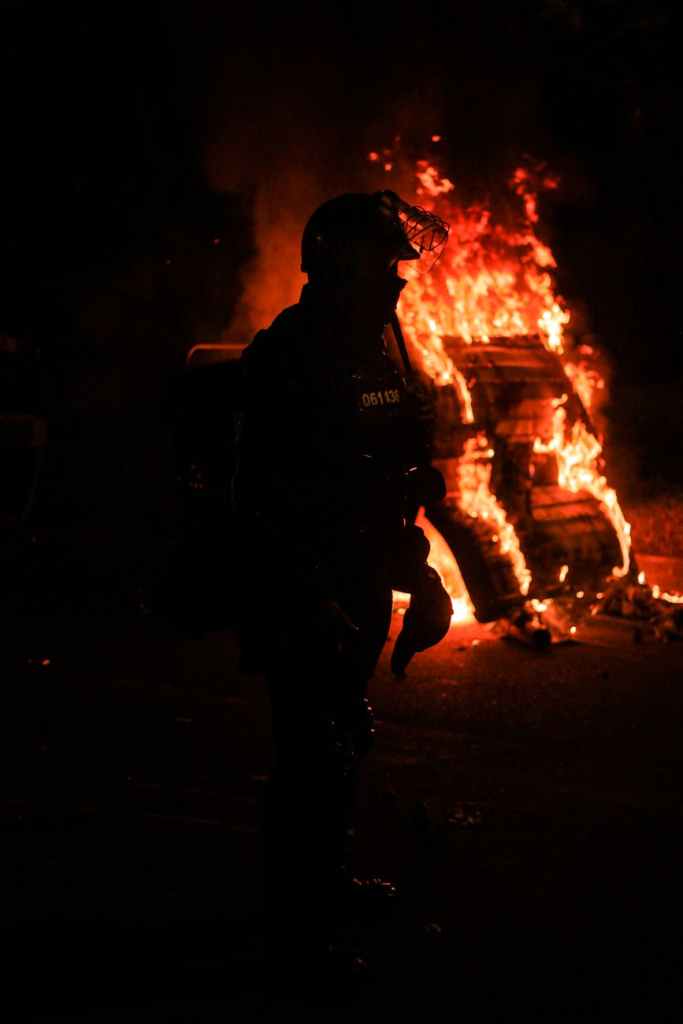
We’ve all been in a crowd, a packed concert, a highwaytraffic, a rush-hour subway platform. Usually, it’s just an inconvenience. But a crowd has a mind of its own, and when that collective mind turns volatile, it can become one of the most dangerous forces on earth.
In these high-density, high-stakes scenarios, the difference between an everyday event and a deadly disaster is often just a handful of behavioral cues and one critical decision: when to leave.
This guide will teach you the fundamentals of crowd safety: how to “read the room,” spot the signs of escalation, and execute a safe, effective exit before the situation spirals out of control.
Part 1: The Collective Mind: How a Crowd Changes You
In a crowd, an individual’s rational mind takes a back seat to the “collective mind.” Understanding this shift is the first step in protecting yourself.
Deindividuation: This is the loss of self-awareness and personal accountability that comes with anonymity. In a large crowd, you feel less like you and more like an anonymous member of the group. This can lower inhibitions and make people susceptible to extreme behavior.
Emotional Contagion: Emotions, especially fear and anger, spread rapidly through a crowd like a virus. A single yell or aggressive act can be instantly amplified, turning a general feeling of unease into full-blown panic or rage.
The Diffusion of Responsibility: When something goes wrong, individuals in a crowd are less likely to act because they assume someone else will. This can delay critical action, whether it’s helping an injured person or calling for help.
Your takeaway: Don’t rely on the crowd to be rational. Your safety is solely your responsibility.
Part 2: Reading the Room: Spotting the Signs of Escalation
Before a crowd becomes truly dangerous (a riot, stampede, or crush), there are warning signs. You need to identify them while you still have room to move.
1. Density: The Physical Threat
This is the most critical factor. Once the density reaches a certain point, individual control is lost, and the risk of crowd crush (asphyxiation) becomes real.
The “Four-Sided Touch”: If you are being touched by people on all four sides of your body, you are in a danger zone.
Loss of Control: If you can no longer choose the direction you are walking, if you are being moved by the force of the crowd, it is time to leave immediately. We will get to how this is done shortly.
Shockwaves: Feeling waves of pressure traveling through the crowd, like a surge, means people are being crushed at the front. This is an extreme warning sign.
2. Sound and Behavior: The Emotional Threat
Listen to what the crowd is telling you emotionally.
Noise Shift: Peaceful cheering or chanting gives way to aggressive shouting, screaming, or a pervasive, low-level groan of discomfort and agitation.
Body Language: Look for people near you who are clenching their fists, squaring off, or showing signs of fear (wide eyes, frantic looking).
Targeted Aggression: If a protest turns from general discontent to focusing on a specific target (police, a building, a group of people), it has crossed a dangerous line.
Part 3: The Exit Strategy: Getting Out Alive
Once you spot the warning signs, every second counts. Your goal is to move from the center of the mass to the periphery, where you can move freely.
1. Plan Your Escape Before You Need It
When entering any crowded venue or area (concert, protest, festival):
Identify Exits: Make a mental note of at least two exits, and not just the one you came in through. Look for side doors, windows, or paths away from the primary flow.
Maintain Distance: Stay away from fixed objects like walls, pillars, fences, and railings. People can be dangerously crushed against these during a surge.
2. Move with Purpose, Not Panic
If the crowd begins to surge or escalate:
Don’t Fight the Current: If the crowd is moving, move with it. Fighting the force will only exhaust you and increase your risk of falling. It is the same as if you fell into a river, if you try to fight the current, you will lose.
Move Diagonally: Work your way out by taking small, diagonal steps between pockets of people, gradually moving toward the edge. Use the lulls between surges to make ground.
Protect Your Chest: If pressure becomes intense, hold your arms in front of your chest, like a boxer protecting their face. This creates a few inches of space, which can be life-saving by protecting your ribcage and allowing your lungs to expand.
3. If You Fall (The Absolute Worst Case)
If you are knocked down, you have seconds to act.
Get Up Immediately: Try to scramble up using the strength of your legs and arms before the crowd passes over you.
Fetal Position: If you can’t get up, immediately curl into a fetal position, covering your head with your arms. This protects your vital organs and provides a small breathing pocket.
Stay Calm: Panic wastes precious oxygen. Focus on controlled, shallow breathing.
Conclusion: Trust Your Gut
In a crowd situation, your intuition is your best survival tool. If a space or atmosphere makes you feel even slightly uncomfortable (too dense, too tense, too loud) leave. There is no prize for being the last person to exit a dangerous situation. Being safe and watching the rest of the event on the news is a better outcome than being a statistic. Be aware, be prepared, and be safe.
 Wallace Smedley